

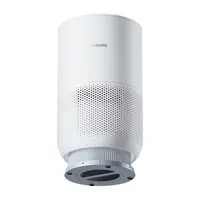
Air Purifiers: Catalog, Price Comparison, and Recommendations for 2026
Look, finding where to buy air purifiers in Israel isn't really difficult today. The question is what you're getting in return. Here at TopMarket, we cut the BS – there's fast home delivery, a warranty from an official importer only (so you won't be chasing ghosts when the motor starts making noises), and the option to spread everything over up to 36 payments. Honestly? It's the sanest way to deal with the heatwaves, the dust of 2026, and the allergies that are ruining our sleep quality.
Why is everyone suddenly obsessed with this?
Dust. Dust mites. Pet dander. We live in the Middle East – haze is practically the fifth season here. People constantly ask me how much air purifiers cost and if it's not just a fan with an expensive filter. So, here's the deal.
If the device doesn't have a genuine HEPA filter (preferably 13 or higher) and an activated carbon filter to neutralize odors (cooking, smoking, the dog that got wet in the rain) – it's just a toy. Buying air purifiers online has become a national sport, but many fall for mismatches. Air purifiers at a special online price sound good... until you realize you bought a compact purifier for a huge living room and it's just choking itself to death in the corner.
So what's the deal with price comparisons?
When people search for an air purifier store in Israel online, they go straight for comparisons. Legitimate. Air purifier price comparisons are important, but the air purifier price is just the beginning. What about the replacement filter? Some models cost peanuts, but their filter will cost you like a small mortgage every six months. What a shame?
That's why it's best to buy air purifiers from someone who also stocks the filters. Official importer. Period. Parallel import will give you terrible headaches with spare parts. Cheap air purifiers sometimes cost a lot – trust me on this one.
The brands that really work now
I won't bore you with every brand in the world. There are a few that just get the job done:
- Xiaomi: Dominating the market. Incredible value for money, built-in smartphone/app that works smoothly. Extra-quiet night mode. Recommended air purifiers for almost every average household.
- Dyson: Expensive. Very expensive. But... impeccably designed and annihilates viruses and bacteria on a crazy level.
- Philips: European workhorses. Super-sensitive air quality sensor. Excellent for a bedroom or for babies.
By the way, there's also Electra and Beurer that put up a good fight if you're looking for more accessible air purifier prices but still with the backing of a known importer.
How many square meters? (The short guide for people with short patience)
The secret is one English word - CADR (Clean Air Delivery Rate). The higher the number, the larger the area the device will clean and the faster it will do it. Here's how not to mess it up:
| Room Size (sqm) | Recommended Power (CADR) | Where does it fit for us? |
|---|---|---|
| Up to 20 sqm (small room) | 150 - 250 m³/h | For a standard bedroom, small office, kids' room. Compact and quiet. |
| Up to 40 sqm (master/small living room) | 250 - 400 m³/h | Large master bedroom or living room in an average apartment. Look for an inverter motor here. |
| Over 50 sqm (open space/large living room) | 400+ m³/h | Large living room connected to the kitchen. Don't compromise on a weak device here because it will run at full speed and be noisy. |
That's it. Simply buy air purifiers according to this table. Don't try to be clever and put a bedroom device in your open-plan living room.
Questions? Of course there are. (FAQ)
Does an air purifier really help against allergies and dust?
Yes, absolutely. But only if it has a HEPA filter (preferably grade 13). Such a filter captures 99.9% of airborne particles – including dust mites, pollen, pet dander, and even bacteria. If you wake up with a runny nose, this will change your life. If the device comes without a real HEPA – it's a waste of money.
How do you choose a recommended air purifier based on room size?
The most important rule – don't buy a small device for a large space. Check the CADR (clean air output per minute) and the 'coverage area' (sqm) that the manufacturer states. An average bedroom will be satisfied with a coverage of 20-30 sqm. A living room open to the kitchen needs a beast of a device rated for 50 sqm and above, otherwise, it simply won't cope with the load and will just be noisy.
How much does it cost to replace a filter and how often?
Wow, this is the most important question people forget to ask. Most filters last between six months and a year, depending on how much the device is running and how much pollution you have at home (pets? smoking?). The cost of a replacement filter usually ranges between 150 to 350 shekels for popular brands like Xiaomi. At TopMarket, we always make sure there's a stock of spare parts available.
What's the difference between an official importer and parallel import for air purifiers?
The difference between heaven and earth when something breaks. An official importer means you have a real service center, available spare parts (especially filters, which are critical), and an app that works properly and doesn't get locked because the device was originally intended for the Chinese market. With parallel import, you might save a few shekels on the purchase, but you're gambling on the service and filter availability in the future.
Does an air purifier consume a lot of electricity with continuous use?
Not at all. Most smart air purifiers today are equipped with an energy-efficient inverter motor. When the air is clean, they switch to standby mode or a low speed that consumes about as much as an LED bulb (around 5-10 watts). Even if you leave it on 24/7 (which is recommended), it will add a few shekels to your bi-monthly electricity bill. It's practically nothing.