

 Install the app
How to Choose a Digital Camera for Beginners
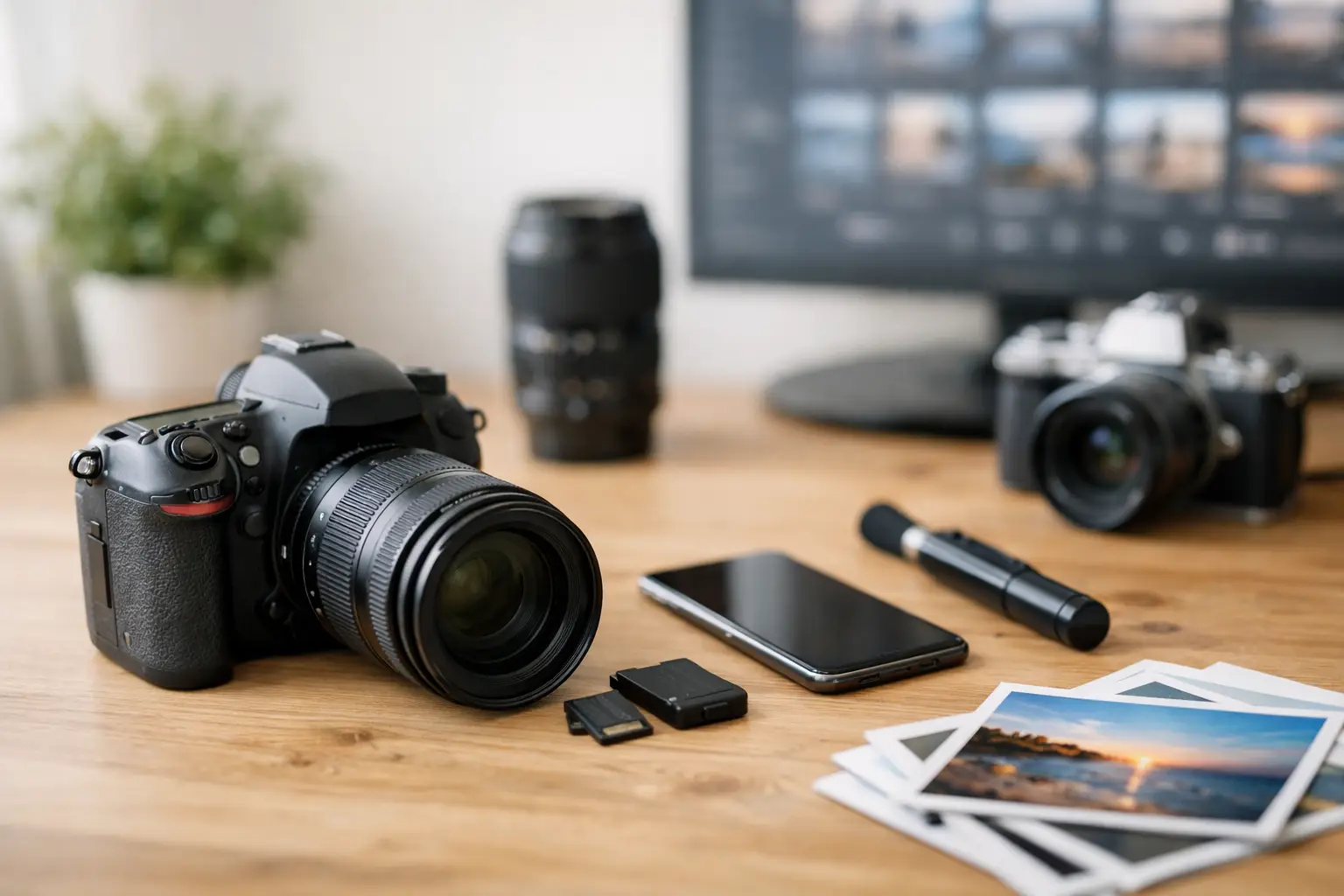
The first photo that reveals a smartphone's limitations often comes at a crucial moment: a child running on the playground, a performance under low light, a trip where you want to print a large picture, or a small business needing clean product shots. A digital camera for beginners doesn’t have to be expensive or complicated, but it should offer a genuine advantage over your phone—in terms of control, quality, and ease of use.
The right choice starts not with the number of megapixels, but with the questions of what you are photographing and how often. An excellent camera that sits unused in a drawer due to its weight, complicated menus, or an unsuitable lens is a less successful purchase than a simpler model that’s easy to take everywhere.
A Digital Camera for Beginners - Three Main Types
Typically, beginners have three relevant options: a compact camera, a mirrorless camera, and a DSLR. Each offers different value based on price, size, and flexibility.
Compact Camera: Simple and Easy to Carry
A compact camera is suitable for those looking for a small, quick, and easy-to-use solution. High-quality models can provide optical zoom, better grip, and performance that exceeds that of a phone in certain situations. This can be a good choice for family photos, vacations, and everyday documentation, especially if zoom is important to you.
However, it's important to compare it to the smartphone you already have in hand. A basic compact camera with a small sensor may not show a significant improvement in daylight. Its advantage is more pronounced when it features useful optical zoom, a relatively large sensor, or video capabilities not available on your phone.
Mirrorless Camera: The Balanced Choice for Most Users
Mirrorless cameras are generally an excellent starting point for those who want to learn photography and advance. They use interchangeable lenses, offer a live display screen, advanced autofocus, and sometimes even high-quality video capabilities. Most models allow you to shoot in full automatic mode at first, gradually transitioning to manual control.
The significant advantage is flexibility. You can start with a kit lens, usually covering a useful range for family and travel photography, and later add a portrait lens, zoom lens, or wide-angle lens. The total price increases as you expand the lens system, so it's wise to choose a system with lenses available at prices that fit your plans.
DSLR: Still Relevant, but Not Always the First Choice
DSLR cameras offer excellent handling, a wide selection of lenses, and in certain models, very good value for money. They are suitable for those who prefer a larger camera body, an optical viewfinder, and prolonged shooting sessions. On the downside, they are usually heavier, and the new model selection is increasingly focused on mirrorless systems.
For a beginner preferring new, compact, and easy-to-use gear, mirrorless is generally a better comparison point. A DSLR can be especially cost-effective when you find a kit at a good price, complete with a quality lens and structured warranty.
Specifications That Truly Impact Results
Megapixels are important primarily if you plan to print large images, crop significantly, or work on detailed product shots. For family use, social media, and standard prints, 20 to 24 megapixels are quite sufficient. Don't choose a camera just because the number on the box is higher.
The sensor size has a greater impact on image quality, especially in low light and the ability to create a blurred background behind the subject. APS-C sensors are very common in beginner mirrorless cameras and provide a good balance between quality, price, and size. Full-frame sensors offer additional advantages but usually come with larger bodies, lenses, and budgets.
Autofocus should also be taken into account. For shooting kids, pets, sports, or video, look for a system that can detect faces and eyes and track movement. For landscape, food, or product photography, the difference isn't as critical, but quick and reliable focus will still save many missed shots.
Image stabilization is another useful specification. Stabilization in the camera body or lens helps shoot handheld at lower shutter speeds, especially indoors and in the evening. It doesn’t freeze the movement of a person or pet, but it definitely reduces blur caused by hand shake.
The Kit Lens is a Start, Not a Compromise
A kit that includes a camera body and a kit lens is usually the cost-effective and correct way to start. A common lens in the 16-50mm or 18-55mm range covers street, travel, family, and landscape photography. It allows you to understand which photography style truly interests you before investing in a dedicated lens.
If your goal is portraits with a soft background, a fixed, bright lens can be a worthwhile first upgrade. If shooting family events, trips, or children from a distance, an additional zoom lens may be more useful. There’s no need to purchase both on the first day. It’s better to shoot for a few weeks, assess what's missing, and then add gear as needed.
Pay attention to the aperture as well. A lower f-number, such as f/1.8, generally indicates a lens that lets in more light and can better separate the subject from the background. On the other hand, such lenses can sometimes be less flexible in terms of shooting angle due to having a fixed focal length.
Video, Screen, and Connectors: Tailor the Camera for Actual Use
If you plan to create family videos, social media content, or product photos for a business, check the video capabilities and don’t settle just for the 4K label. Look for a flip or tilting screen, microphone input, continuous focus during video shooting, and options to connect the camera to a computer or transfer files via Wi-Fi or Bluetooth.
An articulating screen is useful for shooting from low angles, for selfies, and for video. An electronic viewfinder can be very helpful in bright sunlight and provide a feel closer to professional photography. There isn’t a one-size-fits-all answer: someone shooting primarily on trips may prefer lightweight, while someone primarily shooting indoors may favor handling, a larger screen, and convenient connections.
The Real Budget Includes More than the Camera Body
When buying your first camera, it’s easy to focus on the price of the body and forget about the items that will determine if you can shoot continuously. Think ahead about a suitable capacity and fast memory card, an extra battery, a protective case, and a comfortable strap. For video shooting or long trips, an extra battery is often more important than other flashy accessories.
Your pre-order checklist should at least include the following points:
- The actual camera body and lens included in the kit.
- The type of sensor, autofocus system, and image stabilization.
- Weight and dimensions, especially if the camera is intended for travel.
- Availability of lenses and accessories that fit that system.
- Warranty conditions, type of charger, and what’s included in the package.
If your budget is limited, invest first in a good body and kit lens, a reliable memory card, and a basic bag. An external flash, tripod, microphone, and additional lenses can be added only when photography becomes a regular habit.
Common Mistakes in First Purchases
The first mistake is buying a camera that is too advanced under the impression that it will remain relevant for many years. In reality, a complex interface and heavy weight can lead to shooting less. A user-friendly model with good automatic modes, a comfortable screen, and reliable focus will yield more successful shots at the beginning.
Another mistake is ignoring lenses. An advanced camera body with an unsuitable lens for your photography won’t deliver the desired results. Before deciding on a brand or model, check what lenses are available for the system and what the cost of future upgrades will be.
Finally, don’t choose based solely on specifications. Hold the camera if possible, check the button layout, the speed of operation, and the ease of the menus. Good specifications on paper are important, but a camera that is enjoyable to use will give you more opportunities to learn and shoot.
At TopMarket, you can compare cameras, lenses, memory cards, and photography accessories all in one place, by brand, specification, and budget. Choose a model that fits the photography you will do next week, not just the photography you might do in two years—and then get out there, check the results, and let experience guide your next upgrade.
- How to Choose a Wireless Network for a Retail Store?
- Smart Homes That Truly Fit Your Home and Budge
- <h1>Case Study: An Office Computer Upgrade That Saved Time and Money</h1>
- Recommended Gaming Mice for Large Hands: How to Choose the Right One
- When to Repair or Replace Your Computer Monitor: A Repair Shop’s Guide