

How to Choose a Portable Speaker Based on Use, Budget, and Powe
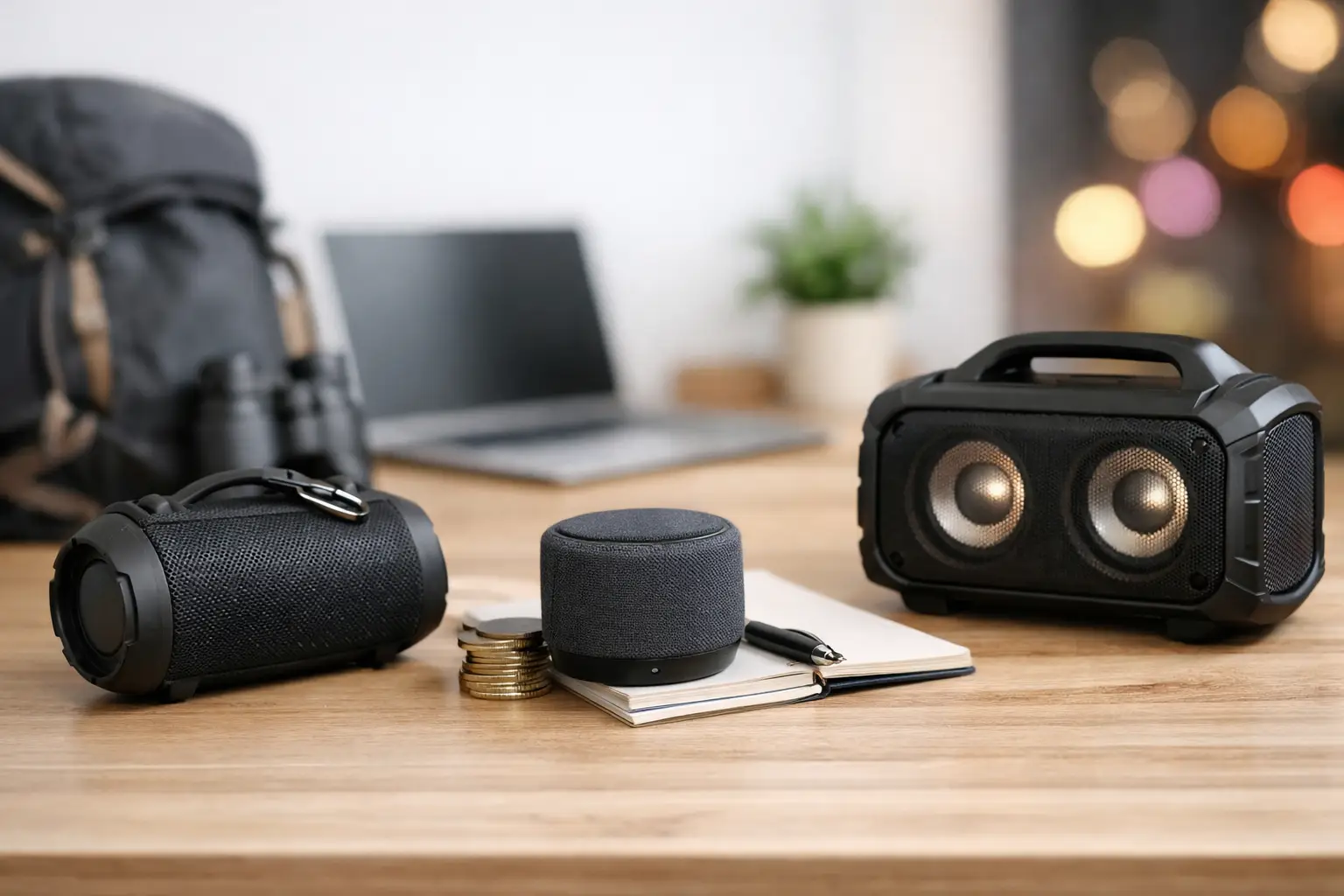
A small speaker can sound great next to your desk, but it can completely disappear amid the noise of a beach, a crowded patio, or a house party. Therefore, the question of how to choose a portable speaker doesn’t start with color, brand, or even price. It begins with where you will really use it: at home, outdoors, while traveling, in front of a computer, with a TV, or as part of hosting equipment.
How to Choose a Portable Speaker Based on Usage Scenarios
Correctly defining your use will save you from buying a product that is too big, too weak, or loaded with features you won't utilize. For personal music enjoyment in a room, office, or next to a computer, a compact speaker with a stable Bluetooth connection and a battery life of 8 to 12 hours is usually sufficient. Here, the main priorities are balanced sound, comfortable weight, and simple controls.
For picnics, hiking, the beach, and the pool, a sturdier model is required: water and dust resistance, long battery life, and a body that's easy to carry. If the speaker is intended for events or a large patio, look for sound volume, noticeable bass, and the option to pair with an additional speaker. A personal speaker doesn’t transform into a party speaker just because it’s outfitted with LED lighting.
The listening style also matters. Those who listen to podcasts, videos, and conversations do not need the same sound profile that an electronic music enthusiast or gamer seeking effects and surround sound would look for. Tailor the product to your actual habits, not to the most impressive specs on the box.
Power: Don’t Just Rely on Wattage Numbers
Wattage is a useful metric, but it doesn’t tell the whole story. A 20W speaker can sound louder and clearer than another model with a higher rating, depending on driver size, acoustic design, high distortion, and battery. In a small room, extreme power is unnecessary, while in an open area, sound disperses quickly and requires more volume.
Check if the manufacturer specifies RMS, which refers to continuous power, rather than just peak power. Peak power appears higher but doesn’t necessarily reflect playback intensity over time. User reviews can help understand whether the speaker remains clear even when turned up or if the bass overwhelms and the sounds become muffled.
For a desk or bedroom, moderate power is definitely enough. For entertaining in a living room, patio, or yard, it’s wise to upgrade to a mid-sized or larger model. If the goal is to fill a very large space, pairing two compatible speakers in stereo can often be a better solution than a single speaker pushed to its limits.
Sound Quality: Strong Bass Doesn’t Always Mean Good Sound
Good bass adds energy to pop, hip-hop, and electronic music, but excessive bass can drown out vocals, guitars, and speech. Look for descriptions of balanced sound, clarity in the midrange, and treble that isn’t piercing. With small speakers, don’t expect deep bass like that of a large home system—a realistic expectation can prevent disappointment.
If there’s a dedicated app with an equalizer, you can tailor the sound to your personal taste. This is a useful addition but won’t fix weak hardware. Good basic sound is better than dozens of EQ modes you won't use.
Battery and Charging: Check the Conditions Behind the Promises
The battery life noted in the specifications is usually measured at medium volume, without strong lighting and constant use of additional features. In reality, playing at high volume, with accentuated bass and RGB lighting, will shorten the operational time. If you need a speaker for a day out of the house, look for a model that offers at least 12 to 16 hours of realistic use, not just an optimistic marketing figure.
USB-C charging is a clear advantage since you can often use the same charger for your phone, tablet, or laptop. Also, check the charging time and whether the speaker can be used while charging. Some models feature a USB output for charging a smartphone, but it should be seen as a backup rather than a replacement for a dedicated power bank.
Water and Dust Resistance: Understanding the IP Rating
For home use, basic splash resistance might suffice. For regular use near a pool, at the beach, or on hikes, the IP rating is a central factor. The marking typically consists of two digits: the first refers to dust protection, and the second refers to water protection.
An IPX4 rating is suitable for light splashes, for example, in a kitchen or on a patio. IPX7 usually indicates resistance to temporary immersion in water, while IP67 generally adds dust protection. Even when the speaker is water-resistant, ensure the connection covers are closed, avoid charging while it’s wet, and don’t assume it’s impervious to all conditions.
Durability may add weight and cost. If the speaker will mostly stay on a shelf in the living room, there’s no need to pay a high premium for advanced outdoor standards. If it will go into a bag, car, and to the beach, the investment can be very worthwhile.
Connections and Connectivity: Bluetooth is the Foundation, Not the Entire Picture
Bluetooth is the most important connection in a portable speaker, but there are differences between models. A newer version can improve stability, range, and energy efficiency, yet good compatibility with your phone is more important than just the version number. It’s a good idea to check if there’s an option to connect to two devices simultaneously, useful when family members or friends want to switch music without disconnecting and reconnecting.
An AUX input is still relevant for computers, old players, or situations where you want a wired connection, independent of your phone’s battery. A USB connection for playing files, a slot for a memory card, or a built-in microphone are additions that can be useful for specific needs, but there’s no point in choosing a lesser model just for a longer list of connections.
If you plan to connect two speakers, check the type of pairing. Some models allow true stereo mode, where each speaker plays a separate channel, while others duplicate the same sound only. It’s also important to ensure the pairing is supported between units of the same series and not to assume any two speakers of the same brand will work together.
Size, Weight, and Actual Portability
Portability is a relative concept. A speaker weighing a few hundred grams is suitable for a day bag and travel, while a model weighing several kilograms may be portable between rooms or from the car to the yard, but not convenient for walking trips. Check the dimensions, weight, handle type, and if it fits in the intended bag or shelf.
A larger speaker generally provides more volume, battery life, and bass, but takes up space and requires more attention when transporting. A tiny speaker is convenient for personal use, but not meant to overcome a noisy environment. The right choice is neither the smallest nor the most powerful—but rather the one you will actually take with you.
Features Worth Paying For, and Those Less So
There are several additions that provide real value, especially when they align with your use:
- The ability to pair two speakers for broader coverage or stereo sound.
- A microphone for calls if the speaker will be regularly on a desk.
- An app with firmware updates and an equalizer, as long as it’s user-friendly and supports the model over time.
- Lighting, only if the speaker is meant for hosting or parties, not if maximizing battery life is the goal.
- Clear warranty and accessible service, especially for speakers intended for frequent outdoor use.
Conversely, don’t let dozens of lighting modes, aggressive designs, or promises like "powerful bass" override checking the core data. A reputable brand, clear specifications, and an organized warranty are practical considerations, especially for purchases where you can’t always listen to the product before ordering.
Matching Your Budget to Usage Level
In the basic price range, you can find excellent speakers for personal listening, studying, and office use. In the mid-range, improvements in power, build quality, battery, and durability are usually found. Premium models justify their price mainly when quality sound, high durability, advanced pairing, or frequent long-term use is required.
Before purchasing, compare models of the same size and usage category, not just by price tag. At TopMarket, you can refine your search by brand, specifications, price range, and relevant features, and check the warranty conditions and delivery alongside the technical details. This way, it’s easier to distinguish between a real discount on an appropriate product and a promotion on a model that doesn’t meet the need.
Leave a small margin in your budget for accessories that might affect usage: a protective case, a quality charging cable, or an adapter for wired connections. A speaker that is well-maintained and easy to charge will serve you better than an expensive model left at home because of inconvenience.
Ultimately, the right speaker is one that fits your listening habits even a month after purchase. Define one central use case, select features that serve it, and ensure that power, battery life, and durability are at the same level of usage. Such a decision will lead to a product you will use repeatedly, not just another gadget sitting in a drawer.