

iPad vs. Android Tablet - Which One is Right for You?
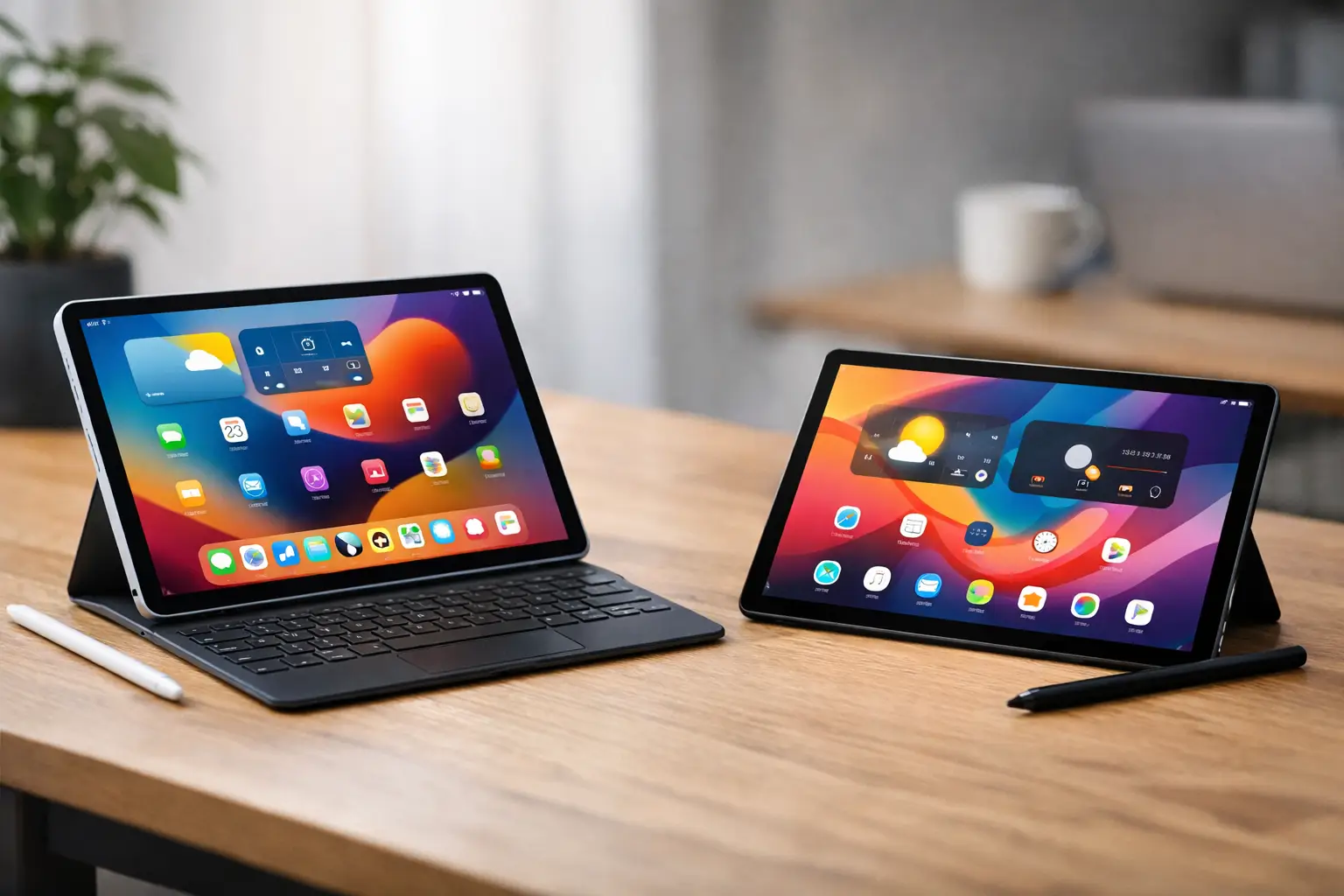
A tablet purchased solely because it was on sale can quickly turn into an expensive screen on your desk. The choice between iPad and Android tablet impacts the apps you'll use, the accessories you can connect, your writing experience, and the overall cost of the device over time. Therefore, it's wise to start with actual usage and only then compare brands, screen sizes, and prices.
A student highlighting PDFs and writing in a digital notebook has different needs than a family looking for a screen for travel, a manager needing access to emails and documents, or a gamer wanting a large screen and good performance. Even within each platform, there are significant gaps between entry-level models, mid-range options, and premium devices. The right comparison isn't logo to logo, but rather between the system, specifications, and equipment you get for your budget.
iPad vs. Android Tablet: Differences Start with the OS
The iPad operates with iPadOS, a system specifically optimized for larger screens and integration with other Apple products. The interface is consistent, software updates generally last for years, and many professional apps receive a particularly polished version for the iPad. Those already using an iPhone, Mac, or AirPods will feel an immediate advantage in file transfers, photo syncing, messaging, and video calls.
Android tablets come from various manufacturers, including Samsung, Lenovo, Xiaomi, and others. The main advantage is variety: you can choose a small and portable display, a large screen for work, a model with cellular connectivity, or a strong-spec device at a lower price. Android is also more flexible in file management, peripheral connections, and customizing the home screen and applications.
However, the Android experience isn't the same across all models. Premium models from reputable manufacturers offer a refined interface, high-quality display, and good support for styluses and keyboards. Very cheap tablets may come with weak processors, limited storage, and short update policies. In contrast, iPads generally have a more uniform product line, but the price of higher storage capacities and original accessories can increase the purchase cost.
Screen, Performance, and Battery: Don’t Just Settle for Size
Screen size is important, but not the only factor. An 8 to 9-inch screen is suitable for reading, navigation, casual viewing, and travel. A 10 to 11-inch screen is the balanced choice for most users as it's comfortable for studying, watching movies, and browsing while still easily fitting in a bag. Screens of 12 to 14 inches are better for working with documents, sketching, multitasking, and keyboard use, but they tend to be heavier and more expensive.
In the iPad range, even base models typically provide good performance for browsing, video, gaming, photo editing, and office applications. iPad Air and iPad Pro models are intended for users who need extra power for illustrating, video editing, handling large files, or extensive creative work. There's no reason to pay for a Pro model if your use is primarily Netflix, browsing, and Zoom lessons.
Android offers a wider range. A tablet with 4GB RAM may suffice for basic viewing and browsing, but for continuous work, it's advisable to look for 6GB or 8GB and above, especially if running multiple apps simultaneously. It’s also essential to check the processor type, refresh rate, display brightness, and storage space. For study files, images, games, and offline viewing downloads, 128GB is often a more comfortable starting point than 64GB.
Regarding battery life, most modern tablets provide a reasonable day of use, but outcomes depend on screen brightness, gaming, cellular connectivity, and the quality of the wireless connection. The mAh number alone does not guarantee better longevity. It's advisable to evaluate the combination of screen size, resolution, processor, and reviews on real-world use.
Apps for Work, Study, and Creation
The iPad is seen as a particularly strong choice for handwritten notes, illustrations, photo editing, and working with creative apps. The support for the Apple Pencil is precise, and applications in illustration, music, and editing are well-developed. Office apps, video calls, task management, and document reading also function well, but keep in mind that a tablet is not always a full substitute for a laptop, especially when specific organizational software or complex file handling is necessary.
On an Android tablet, you can use the same key Google, Microsoft, Adobe apps, and streaming services, along with a more open file management system. In some Samsung models, for instance, a desktop environment allows working with windows, a keyboard, and a mouse in a way that's closer to a computer. This is a practical option for emails, Office documents, presentations, and task management, but it's still not a replacement for a workstation running heavy professional software.
Before making a decision, check the three apps you use most often. Do they have a good tablet version? Do they require a subscription? Are the files saved to a cloud service you're already using? This choice can be more significant than the difference of several hundred shekels in the device's price.
Pen, Keyboard, and Accessories: The Cost Not Always Reflected in Price
The tablet itself is only part of the deal. Those planning to study with handwriting, draw, or sign documents should check whether a stylus is included in the package, which model is supported, if there’s wireless charging, and the feel of writing. Some Android tablets include a stylus in certain models, while iPads sometimes require a separate purchase for the stylus. This gap alters the true price comparison.
A keyboard with a cover can transform a tablet into a useful working tool, but it's crucial to check the key layout, support for Hebrew, the angle of support, and the weight of the complete kit. If a keyboard and mouse are part of your plan, it’s worth comparing the total cost of the tablet, cover, stylus, and charger. Sometimes, a well-equipped mid-range model will fit better than an advanced model purchased without the necessary accessories.
Connections also matter. USB-C is now common on both platforms, but capabilities vary between models. Those who need to transfer files from an external drive, connect a screen, use a card reader, or operate photography equipment should ensure compatibility beforehand and not assume that all USB-C connections provide the same options.
Price, Storage, and Long-term Updates
The iPad generally retains good resale value in the second-hand market and receives software updates for an extended period. This is an advantage for those who prefer to buy a device and keep it for several years. On the other hand, the entry price, storage expansion, and accessory purchases may be higher, and it’s impossible to expand storage via a memory card in iPad models.
In Android tablets, there tends to be more competition on price and a broader range of specifications. Some models include support for microSD cards, which is beneficial for those storing many media files or using the tablet for content downloaded in advance. Conversely, it’s essential to check how many system and security updates the manufacturer guarantees. For a tablet used for banking, work, personal documents, and organizational accounts, long-term support is a practical consideration, not just a nice addition.
Don’t choose based solely on the discount price. Always compare storage capacity, RAM, warranty, Wi-Fi or cellular connectivity, included accessories, and update policies. A cheaper purchase can be very worthwhile as long as it doesn’t require a quick replacement in a year or two.
How to Choose the Right Tablet Based on User Type
For a family looking for a device for viewing, browsing, and online classes, a quality Android tablet in the size of 10 or 11 inches can offer excellent value. Look for a good screen, decent storage, convenient speakers, and protective cases. For children, consider options for parental controls, durability, and managing separate accounts.
For students, the choice depends on their learning style. Those who often highlight articles, write notes, and sync materials with an iPhone or Mac may prefer an iPad with a stylus. Those working extensively with Google services, wanting flexible files, a large screen within a set budget, or a keyboard as part of the solution will find advanced Android models to be a very robust option.
For designers, illustrators, and content creators, it’s advisable to first examine the applications and the stylus, then look at the specifications. The iPad is particularly well-suited for those reliant on dedicated creative applications. An advanced Android tablet could be preferable for someone seeking a large AMOLED screen, a computer-like workspace, expandable storage, or integration with an existing Android phone.
For a small business or field worker, the tablet should be an efficient tool, not just another device. A bright screen, cellular connectivity as needed, a rugged case, a keyboard, the ability to handle files, and support for security updates are more important than an ultra-slim profile. At TopMarket, you can compare models, specifications, and accessories in one place and build a setup that matches the nature of your work.
The best choice is one that remains useful even after the excitement of the new screen fades. Set a budget that includes accessories, list the tasks the tablet is supposed to perform, and choose a model that clearly meets them and not just boasts impressive specifications on paper.