

 Install the app
Robotic Vacuum vs. Mop - Which is Right for Your Home?
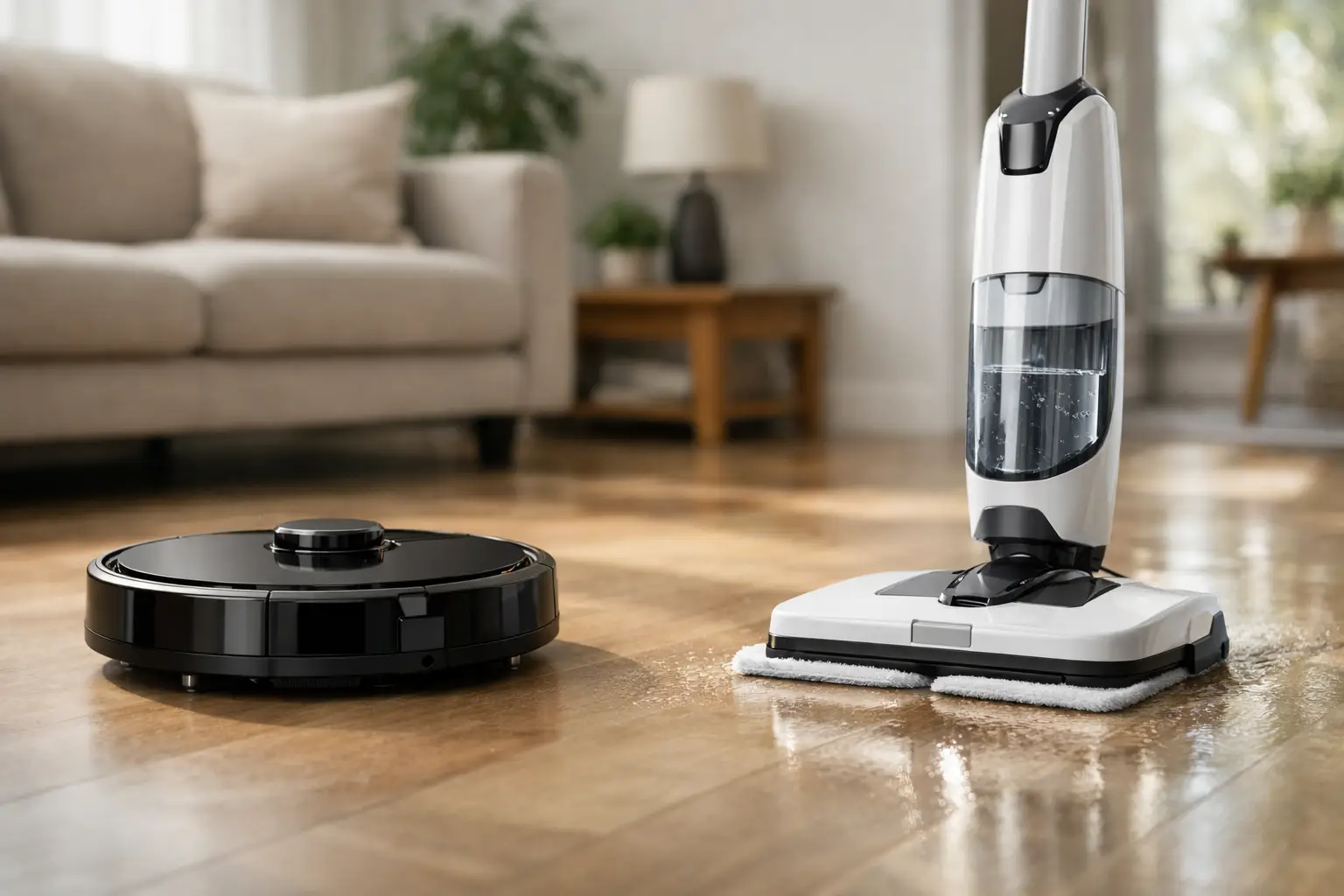
If your floor looks clean in the morning but by noon is covered with crumbs, hair, and dust, the question is not whether you need an automatic cleaning device, but rather which type will save you the most effort. The comparison between robotic vacuum cleaners and mops begins with a basic difference: a conventional robotic vacuum focuses on picking up dry dirt, whereas a robotic mop also adds a wet pass that helps keep the floor cleaner between thorough cleanings.
The choice is not determined solely by price or the number of modes in the app. Factors such as the type of flooring, the presence of carpets, pets, children, the size of the apartment, and the time you are willing to spend on maintenance will significantly influence your satisfaction with the device over time.
Robotic Vacuum vs. Mop: The Practical Difference
A standard robotic vacuum navigates the house, detecting walls and obstacles, and vacuums dust, dirt, crumbs, and hair using a main brush and side brushes. In advanced models, it maps rooms, allows you to set no-go zones, returns to its charging station, and sometimes even empties its dust bin automatically. This is an efficient solution for daily maintenance of dry floors.
A robotic mop performs the same tasks, but after vacuuming, it applies wet mops or rotating cloths. The goal is not to replace aggressive manual scrubbing after a renovation or heavy cooking but to deal with the fine dust left on the floor, footprints, light stains, and the sticky feeling that accumulates in kitchens and dining areas.
There are also non-robotic mopping devices, such as handheld mop-vacuums. They are generally better at tackling concentrated wet messes but require you to physically move through the entire home. Therefore, when looking for an automatic cleaning product, it is essential to ensure that the specifications pertain to a robotic mop-vacuum and not a manual mopping device.
When a Regular Robotic Vacuum is the Right Choice
In a home with many carpets, sensitive hardwood floors, or a primary need to collect hair and dust, a regular robotic vacuum may be the more straightforward and cost-effective choice. It is suitable for those who already mop manually once a week or use a cleaning service and primarily want to reduce their daily workload.
Its main advantage is relatively easy maintenance. You simply empty the bin or bag at the emptying station, clean the brush occasionally, and check for hair wrapped around the wheels. There are no dirty water tanks, mops requiring washing, or the risk of a wet cloth being left on hardwood floors for too long.
Models with high suction power, rubber brushes, and good navigation systems can be very effective in homes with pets. However, the suction power alone does not guarantee good results. The quality of the brush, the design of the suction opening, the ability to climb over carpets, and navigation along walls are equally important.
When to Invest in a Robotic Mop
A robotic mop is particularly suitable for apartments with plenty of hard flooring: porcelain tiles, ceramics, marble, vinyl, or laminate that can handle moisture. It stands out in homes with small children, pets, or active kitchens, as the messes there are not only dry. A squished crumb, a spilled drop, or a mark near the dining area requires a thorough cleaning as well.
The gap between a basic mopping system and an advanced one is significant. In a basic model, a damp cloth is dragged behind the robot. This is good for a light refresh but less effective on dried stains. In more advanced models, there are rotating cloths that apply pressure on the floor, regulate the water flow, lift cloths on carpets, and have a docking station that washes and dries the cloths.
An automatic cleaning station is not just a convenient addition. In a large home or with daily use, it can make the product much more practical: it empties the dust, fills with clean water, collects dirty water, and reduces the need to deal with cloths after every use. On the flip side, it takes up space, requires a constant power outlet, and increases the overall cost of the purchase.
Floors, Carpets, and Obstacles: Fit Check Before Purchase
The type of flooring is the first point of consideration. A mop robot that excels on tiles is not necessarily the best choice for natural wood floors. Even when the manufacturer states compatibility with hardwood, it’s advisable to check if you can control the water flow and if there are options to set no-clean zones. Floors with deep grooves or a rough texture may still require manual cleaning occasionally, even with an advanced model.
Carpets add complexity. With a regular robotic vacuum, you should examine the ability to climb over carpet thresholds, identify carpets, and increase suction. With a robotic mop, it’s essential to check what happens when it encounters a carpet: does it lift the cloths high enough, avoid the carpet while mopping, or do you need to remove the cloths before usage? In homes with particularly thick carpets, don't rely solely on general descriptions - check the climbing height specifications and how it operates in mop mode.
The layout of the home also matters. Cables on the floor, toys, water bowls, high thresholds, and tightly packed chair legs can complicate operations for any robot. Cameras or obstacle detection sensors help, but they do not replace the basic tidiness of the floor. Anyone wanting to operate the robot while not at home will greatly benefit from a good obstacle detection system and a mapping feature that allows defining no-entry areas.
Specifications to Compare Beyond Price
When comparing products, start with the role the device is supposed to fill rather than the list of features. For vacuuming, check the type of brush, suction power, dust bin volume, corner efficiency, and the availability of filters and parts. For mopping, examine the type of cloths, water tank capacities, control over moisture levels, self-cleaning capabilities, and drying features.
For navigation, laser models generally offer accurate mapping and consistent performance even in low light. Camera-based systems may excel at object detection, but their capabilities depend more on lighting conditions. The app should allow at least room division, scheduling, suction strength selection, and defining no-go zones. These features impact daily usability more than dozens of cleaning modes that you likely won't use.
It's also crucial to compare long-term costs. Emptying station bags, filters, brushes, cloths, and specialized cleaning products are part of the upkeep. A cheaper device with costly or hard-to-find parts isn't necessarily the best deal. Before ordering, check what’s included in the package, the warranty period, and what consumable parts are expected to be replaced.
What to Expect for Every Budget
In the entry-level category, you can find robotic vacuums that perform basic dust maintenance and sometimes also utilize a mop. These are suitable for small apartments, relatively open floors, and for those willing to empty and clean the device themselves. There’s no reason to pay for a full washing station if you only operate the robot once a week.
At the mid-range level, look for reliable mapping, good suction power, support for defined areas, and useful mopping features. This is usually where the balance is found for most households: sufficient automation without the high cost of a large station and complex systems.
In the advanced category, you typically receive a docking station with emptying, cloth washing, drying, and sometimes automatic filling features. This solution is intended for those who desire minimal hands-on involvement, but maintenance is still necessary. You must clean the dirty water tank, check the station base, and replace consumables as recommended.
Choosing Based on Your Home Routine
If most of your mess consists of dust, hair, and crumbs, and you have many carpets or sensitive hardwood floors, a high-quality robotic vacuum is a focused and economical choice. If hard flooring makes up most of your home and you want to take mopping off your schedule too, a mop-vacuum with a good mopping system and easy maintenance will provide more value.
For busy families, the right question isn’t which device promises the strongest cleaning on paper, but which device you will actually operate three to five times a week. Compare specifications, parts, warranties, and suitability for your home, and choose a system that transforms regular cleaning into a simple task rather than another device that will sit in the closet.
- Smart Homes That Truly Fit Your Home and Budge
- <h1>Case Study: An Office Computer Upgrade That Saved Time and Money</h1>
- Recommended Gaming Mice for Large Hands: How to Choose the Right One
- When to Repair or Replace Your Computer Monitor: A Repair Shop’s Guide
- Video Editing Computer Buying Guide by Budge