

 Install the app
How to Choose a Mechanical Keyboard for Gamers
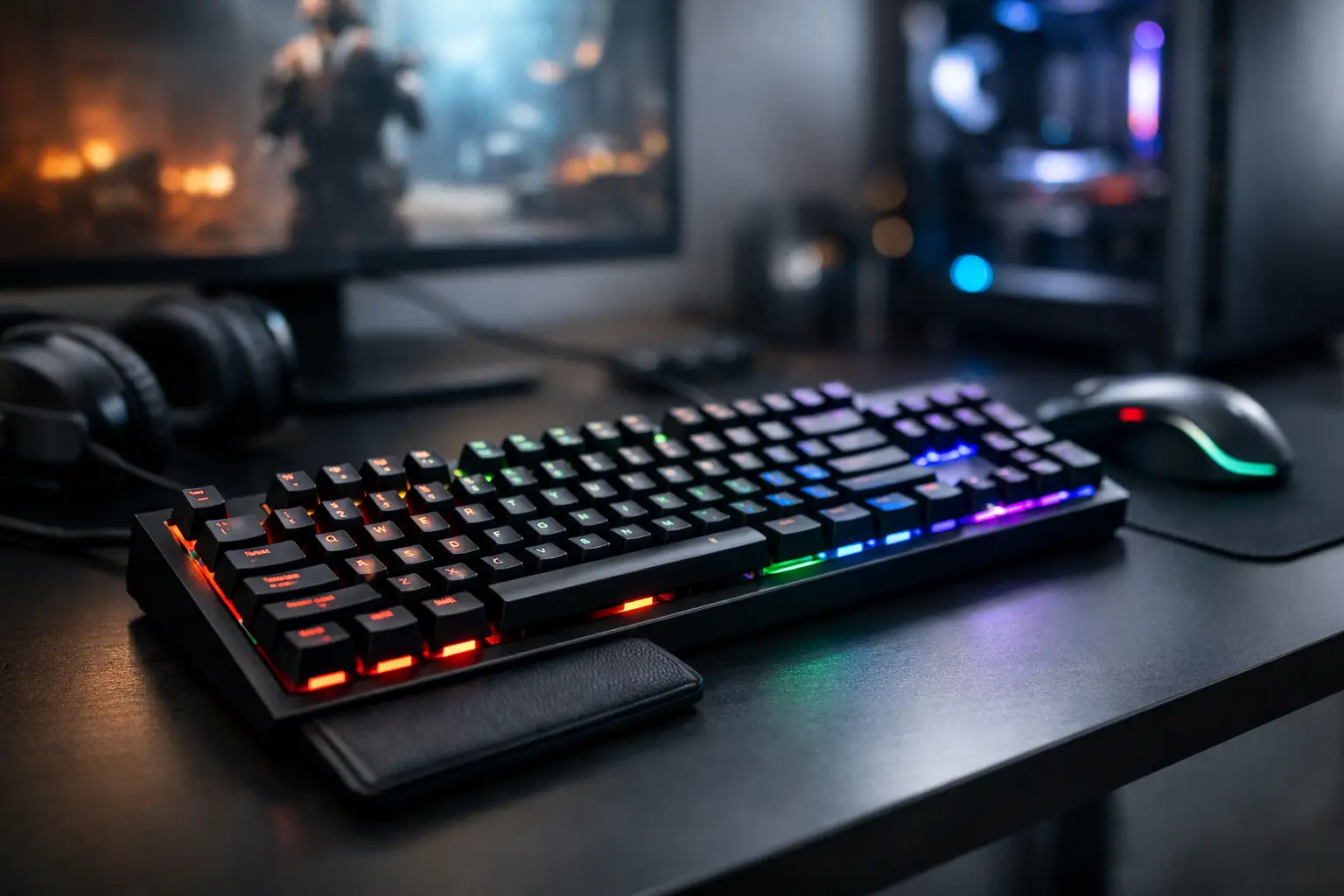
You don’t need to play at a competitive level to feel the difference between a regular keyboard and a mechanical gaming keyboard. The difference is noticeable in the key press itself, response speed, timing during gameplay, and also in comfort over long hours. Those who buy based only on RGB lighting or the lowest price quickly discover that the keyboard looks good in pictures but is less suitable for everyday use.
What Really Matters in a Mechanical Gaming Keyboard
The main advantage of a mechanical keyboard is that each key operates with a separate switch. This means a clearer typing feel, higher durability, and the ability to choose a key press characteristic that perfectly matches the type of games and usage style. Some gamers prefer a light and fast keystroke for FPS games, while others may want a more tactile feel that offers clear feedback for both typing and MMO games or daily work.
There’s no one-size-fits-all answer here. If the keyboard will be used solely for gaming, a faster and more aggressive model might be the way to go. If it will also be used for studies, office work, or extensive typing, it’s advisable to choose something more balanced; otherwise, the user experience can become tiring.
Types of Switches - The Decision That Changes Everything
Linear Switch
This is the most popular type among many players, especially in fast-paced games. The keystroke is smooth, with no "bump" in the middle and no strong click. The result is quicker movement between keys and a flowing feel. On the downside, some may find it less accurate for touch typing since there is no clear tactile feedback.
Tactile Switch
A tactile switch provides a slight resistance at the point of actuation. This is suitable for those who want to know when a key is pressed without bottoming it out. In many cases, this is a smart choice for someone looking for a keyboard that works well for both gaming and office tasks. It is less "floating" than a linear switch but still fast enough for most gamers.
Clicky Switch
This switch offers both tactile feedback and a pronounced click sound. Some gamers love this sensation, but it’s important to consider that it is louder. In shared spaces, voice chat, or remote work, this can become a problem more quickly than one might think.
Keyboard Size - Not Just About Desk Space
One of the most important considerations is the format. A full-sized keyboard includes a numpad, which is convenient for those who work with numbers, spreadsheets, or office tasks. The downside is that it takes up more space, sometimes pushing the mouse too far to the right.
The TKL format skips the numpad while keeping most of the essential keys. This is one of the most balanced options for gamers since it saves space without sacrificing too much comfort. 60% or 65% keyboards save even more space and are suitable for those looking for a compact setup or a small desk, but one will need to get used to function layers and key shortcuts.
If you often play with wide mouse movements, especially in FPS, a smaller keyboard has a significant advantage. If you also incorporate office use, it’s sometimes better not to go too small just for aesthetics.
Response Time, Polling Rate, and Latency
Not every mechanical keyboard is automatically a good gaming keyboard. In models designed for gamers, you often find a focus on low latency, high polling rates, and quick processing of key presses. These specifications are more important for competitive players, but even an average player will notice differences if the keyboard is slow or inconsistent.
However, it’s not wise to get hung up on just the highest number in the specs. The difference between good models is mainly felt when the overall package is of high quality—good switches, stable keys, reliable firmware, and a stable connection. A keyboard with impressive marketing stats but weak build quality won’t provide a good experience over time.
Wired or Wireless Connection
In the past, almost every serious gamer would choose a wired connection. Today, the picture is different. There are wireless keyboards with excellent performance, very low latency, and good battery life. For those wanting a cleaner desk or to work with multiple devices, wireless can be an excellent solution.
On the flip side, for those who prefer minimal hassle, a wired connection remains the simplest and most reliable choice. There’s no charging, no battery, and no need to remember if high-performance mode is activated. If the keyboard is stationed at a gaming computer, a wired connection is still a very logical solution.
Build Quality - Here You’ll Feel If You Made the Right Purchase
There is a significant gap between a keyboard that looks good on the product page and one that feels good in practice. A frame made of thin plastic can lead to uncomfortable flexing, unnecessary noises, and a sense of a cheap product. In contrast, a sturdier frame, sometimes made of aluminum or better material combinations, significantly enhances the overall feel.
Pay attention to the stabilization of large keys like space, Shift, and Enter. In cheaper keyboards, these are usually the first points that reveal mediocre quality. If they wobble, rattle, or feel uneven, daily use will suffer.
RGB Lighting and Software - A Nice Addition, Not a Buying Reason
RGB lighting definitely enhances the aesthetics and, in some cases, improves usability in low-light conditions. However, it shouldn’t be the parameter that drives your choice. It’s better to have a keyboard with good switches and sturdy construction without excessive effects than a colorful model that feels flimsy.
The software is more important than it seems. If you plan to set up macros, change profiles, map keys, or control lighting in detail, it’s advisable to check that the software is user-friendly and stable. Clunky software can turn a good feature into a hassle.
Do You Need Hot-Swappable?
If you love upgrading, experimenting, or changing switches in the future, hot-swap support can be a significant advantage. It allows you to replace switches without soldering, offering much flexibility. For some buyers, this is a nice bonus, while for others, it is a central reason to choose a specific model.
On the other hand, if you simply want to plug in the keyboard and start gaming, this is not a must. It’s better to invest a higher budget in good basic quality than on features you may not actually use.
How Much to Really Invest
The price range in this category is very wide, and the differences don’t always reflect performance alone. At the entry level, you can find decent models for beginner gamers or those switching to mechanical for the first time. At mid-range, there’s usually a noticeable improvement in switch quality, build, software, and typing consistency.
At the high end, you often receive better materials, improved acoustics, advanced features, sophisticated connectivity, and a more polished overall feel. However, not every player needs a premium model. If you play several times a week and want good value for money, a quality mid-range keyboard will suffice in most cases.
Matching According to Play Style
FPS players typically prefer a more compact keyboard with faster switches and relatively light keystrokes. This leaves more room for the mouse and supports quick movement. MOBA and MMO players may value extended comfort, macro mapping, and customized profiles more.
Those who also mix in work, studies, or general use should be cautious of making too extreme a choice. An ultra-fast keyboard may look impressive on paper, but if it’s too sensitive for everyday typing, the result can be less comfortable. Therefore, the right choice begins with a simple question—how much time will the keyboard be used for gaming, and how much for everything else.
How to Read Specifications Without Falling for Marketing
It’s advisable to check which switches are actually installed, the size of the keyboard, whether there is anti-ghosting and N-key rollover, what type of connection exists, if there is software support, and the quality of the materials. These are details that genuinely affect usage.
In contrast, general phrases like "eSports performance," "extreme speed," or "professional experience" don’t say much without clear specifications. When comparing models, it’s best to stick to useful data and reputable brands with proper warranties. On a broad site like TopMarket, it’s easier to compare price levels, formats, and specifications without jumping between several stores.
Common Mistakes in Buying a Mechanical Gaming Keyboard
The first mistake is buying based solely on appearance. The second is choosing a switch based on general recommendations without considering personal use. The third mistake is ignoring keyboard size, even though it’s one of the things you feel fastest on the desk.
Another common mistake is thinking more expensive always means better. Sometimes an intermediate model from a reputable manufacturer will fit much better than an expensive model with features you won’t utilize. The right approach is to decide in advance on budget, primary use, and desired size, and then filter based on actual specifications rather than just the product image.
If you choose wisely, a good keyboard will not just be another RGB accessory on your desk, but an upgrade that’s felt in every game, every keystroke, and every hour of use.
- How to Choose a Wireless Network for a Retail Store?
- Smart Homes That Truly Fit Your Home and Budge
- <h1>Case Study: An Office Computer Upgrade That Saved Time and Money</h1>
- Recommended Gaming Mice for Large Hands: How to Choose the Right One
- When to Repair or Replace Your Computer Monitor: A Repair Shop’s Guide