

 Install the app
Recommended Mobile Phones for Photography - How to Choose Wisely
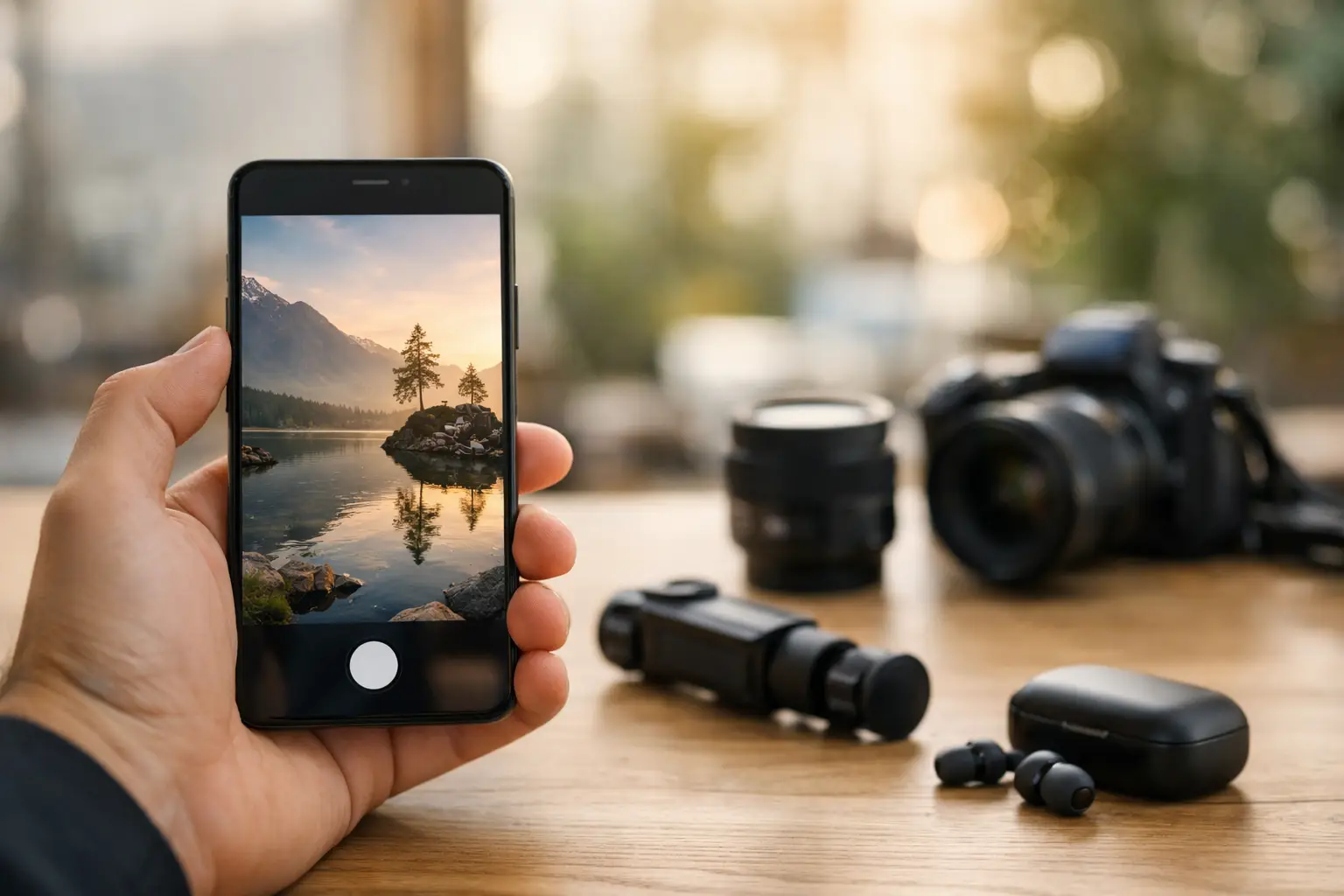
When searching for a recommended smartphone for photography, it’s easy to get caught up in marketing numbers — 200MP, massive zoom, advanced AI, and an extensive camera setup on the back of the device. In reality, good photo quality isn’t determined solely by the number of megapixels. Those who want to make the right choice should examine how the camera performs in low light, how good the video stabilization is, whether the colors are consistent across lenses, and if the device truly delivers good results in everyday situations, not just in lab conditions.
What Truly Determines a Recommended Smartphone for Photography
The first parameter is sensor size, not just resolution. A larger sensor captures more light, which typically results in better nighttime photography, a wider dynamic range, and less digital noise. This is why a 50MP device with a quality sensor can outperform a 108MP or 200MP device with a smaller sensor.
The second parameter is image processing. Here, the differences between manufacturers are quite pronounced. Some devices produce sharp and impressive images right from the camera, but sometimes overdo sharpening, saturation, or face brightening. Others give a more natural result, suitable for those who want true-to-life photography. Social media enthusiasts might prefer images ready for sharing, while editing aficionados may favor a more natural base.
The quality of the lens is also important. If the main lens is excellent but the wide-angle or telephoto lens is weak, you’ll experience inconsistent photographic quality. For many users, a truly good camera isn’t just about the main lens — it’s about a balanced system that performs well in various scenarios.
How to Match a Smartphone for Photography to Your Usage
Those primarily photographing children, family, and pets need quick focus and a short response time. In these cases, a sharp shot at the right moment is more crucial than an additional 20 megapixels. A device that lags on the shutter or struggles to track movement will miss shots, even if its specs look impressive on paper.
For travel and landscape photography, pay special attention to a good wide-angle lens, dynamic range, and the ability to handle bright light and shadows. Landscapes with burnt skies or overly dark areas look less appealing, even if sharpness is high.
If you frequently shoot at night, examine real-world nighttime performance, not just marketing promises. In some devices, night mode appears impressive on a small screen, but in reality, it smooths out details, creates unnatural colors, or blurs movement. If you often photograph restaurants, shows, streets in the evening, or indoor events, this is a critical test.
For users who shoot video, priorities shift slightly. Here, it’s important to check optical and electronic stabilization, microphone quality, seamless transitions between lenses, and consistent focus during movement. Some devices excel in still photography but are weaker in video, and vice versa.
Specifications to Check Before Purchase
Start with the main camera — is there optical stabilization, what is the sensor size, and what is the aperture? Then check the wide-angle lens and whether it is genuinely useful or merely included to enhance the camera list. In lower-priced devices, the wide-angle lens is often a clear weak point.
Optical zoom is a real advantage, especially for those photographing performances, travel, kids on the playground, or portraits. Digital zoom can help, but it doesn’t replace a quality telephoto lens. If zoom is important to you, don’t settle for high zoom numbers in marketing — check if it's optical, hybrid, or just digital zoom.
The screen also impacts the photography experience. A bright and high-quality display helps accurately see exposure, colors, and sharpness in real-time, especially in outdoor photography. Additionally, internal storage is crucial — high-resolution images and 4K or 8K videos can quickly consume space. Anyone who shoots a lot will feel the difference between 128GB and 256GB or more.
The battery is not trivial either. Taking photos, processing images, using a bright display, and recording videos strain the device. If you’re looking for a recommended smartphone for photography for trips or a long workday, it’s wise to choose a model with a strong battery and fast charging.
Where There Are Gaps in Price Ranges
In the mid-range category, you can now find very good cameras for daylight photography and sometimes nice results indoors and for social shots. This is a strong area for those seeking high value for money without needing the most advanced camera on the market. Generally, compromises will be in zoom, nighttime photography, video, or consistency across lenses.
Premium devices usually feature better sensors, more advanced image processing, more practical optical zoom, higher-quality video, and consistent performance across all camera systems. Anyone who takes a lot of pictures and wants quality results in nearly any situation will feel the difference. However, those who primarily shoot in daylight and occasionally at night don’t always need to upgrade to the highest price category.
There are also cases where an older model proves more cost-effective than a new one. In the world of smartphones, the differences in photography from generation to generation are not always dramatic. Sometimes the main difference lies in the processor or peripheral features, while the actual image quality remains very close. For a smart purchase, this is a point worth checking.
Recommended Smartphone for Photography vs. General Good Camera
Not everyone looking for a good camera needs the same thing. Some users require a balanced device — good camera, good screen, battery life, performance, and reasonable price. Others are willing to compromise on weight, size, or price to achieve the highest level of photography.
Thus, the right choice isn’t necessarily “the phone with the best camera,” but the device that offers the right value package for you. If you work a lot on your phone, use heavy applications, or play games, it’s unwise to neglect the rest of the specs just for the camera. On the other hand, if photography is a central reason for your purchase, it’s worth allocating a larger portion of the budget to this category.
Common Mistakes When Buying a Smartphone for Photography
The first mistake is focusing solely on megapixels. This figure is easy to compare, but it falls short of telling the whole story. Sometimes it can even be misleading, especially when the manufacturer uses it as a substitute for explaining sensor quality and processing.
The second mistake is being impressed by multiple cameras. Four cameras on the back of the device do not necessarily mean four useful cameras. Sometimes two of them are peripheral sensors that do not significantly add value to photography.
The third mistake is ignoring the type of usage. A user primarily shooting stories, selfies, and short videos needs to pay attention to the front camera, stabilization, and skin tone. Those photographing products for a small business need good sharpness, close focus, and stable white balance. Travelers require quality zoom and wide-angle lenses. Needs vary, and so does the correct recommendation.
The fourth mistake is buying based on a single sample. Successful marketing photography does not mean the device performs consistently in all situations. What matters is not just one good photo, but the device's ability to deliver reliable results time and again.
Who Should Invest More in a Camera
If your phone is replacing a compact camera, the investment can definitely be justified. This is particularly true for those frequently photographing children, creating content for social media, products, travel, or videos. Here, the improvement is felt not only in quality but also in speed, reliability, and the flexibility of the camera.
If photography is only a secondary necessity, a quality mid-range model might do the job excellently. In many cases, the difference between a good mid-range device and a flagship unit becomes apparent mainly in extreme conditions — nighttime, advanced zoom, professional video, or consistent performance over time. Not every user needs to pay for these advantages.
On a site like TopMarket, where you can compare specifications, storage capacities, models, and price ranges in the same category, it’s easier to identify whether you’re paying for a genuine photo upgrade or just for a newer model with a minor improvement.
How to Choose Wisely Before Ordering
If you want to streamline the process, first define your three primary photography scenarios — everyday and family, travel and landscapes, or video and nighttime. Then compare models based on the main camera, zoom, nighttime performance, storage capacity, and battery. This is a more efficient way than starting with the number of cameras or the full marketing specification.
Also, remember that a good photography device is one you will enjoy using over time. If it’s too heavy, too big, or more expensive than you planned, the choice may be less suitable, even if the camera quality is very high. The smart choice balances photography, budget, and ease of use — because good photos start with a device that truly fits your needs.
- Smart Homes That Truly Fit Your Home and Budge
- <h1>Case Study: An Office Computer Upgrade That Saved Time and Money</h1>
- Recommended Gaming Mice for Large Hands: How to Choose the Right One
- When to Repair or Replace Your Computer Monitor: A Repair Shop’s Guide
- Video Editing Computer Buying Guide by Budge