

 Install the app
Recommended Smartwatch for Sports - How to Choose Wisely
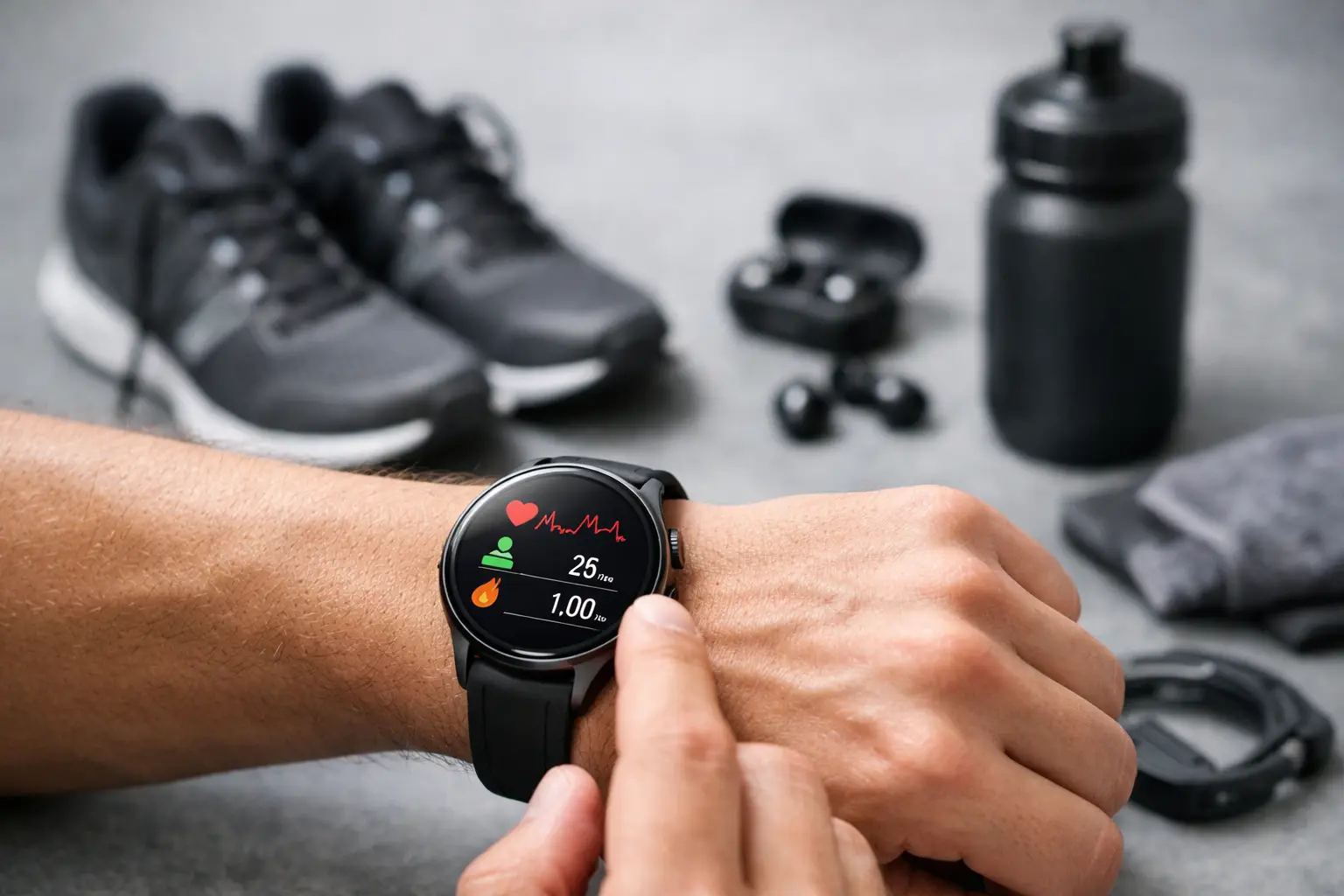
If you've arrived looking for a recommended sports smartwatch, chances are you don’t need just another screen on your wrist – you need a work tool. This distinction is important. A good smartwatch is not measured solely by its design or brand name, but by the accuracy of its GPS, heart rate monitoring quality, battery life, comfort on your wrist, and suitability for the type of training you actually do.
Some people work out three times a week at the gym, some run 10 km every Saturday, and some seek daily tracking to encourage them to move more. Not every watch is suitable for every user. Making the right choice saves compromises and, most importantly, avoids paying for features that you won’t genuinely use.
How to Choose a Recommended Sports Smartwatch
The right way to choose begins not with the specifications but with your training habits. Those who run outdoors need reliable and quick GPS, preferably with stable reception even in urban environments. If you mostly train indoors, you might only need good movement and heart rate tracking without paying extra for advanced navigation systems.
The frequency of use also matters. If you plan to wear the watch all day, weight, strap type, and comfort become critical. A heavy watch with a large body might look impressive on the product page but can be less pleasant to wear during sleep, workouts, or a full workday.
Another question to consider upfront is how much you truly utilize the data. Some watches provide basic metrics like steps, calories, heart rate, and sleep. Others delve deeper with training load, recovery, VO2 Max, heart rate zones, running metrics, and advanced analysis. If you enjoy comparing performance and improving paces, these data points hold value. If the goal is simply to maintain consistency, a simpler interface may work better.
GPS, Heart Rate, and Sensors – What Really Matters
GPS is one of the central components of any sports watch. Beyond its presence, it’s essential to check the tracking quality, satellite lock time, and accuracy levels during running, walking, cycling, or hiking. A watch that loses signal or displays inconsistent distances can mar the entire workout experience.
The heart rate sensor is equally important, but it’s vital to be realistic. Optical wrist measurement is very convenient and suitable for most users, but during sharp interval workouts, strength exercises, or aggressive cycling, inaccuracies can occur. If you train seriously and rely on heart rate zones, it’s best to opt for a model with a high-quality sensor or one that supports connection to a chest strap.
Additional sensors like a blood oxygen meter, barometric altitude, compass, skin temperature sensor, or recovery metrics can be useful, but are not always necessary. Here, marketing can mislead. If a feature does not serve a practical use, it’s not a good reason to pay more.
Recommended Sports Smartwatch Based on Usage
For running, look for a combination of accurate GPS, a readable display in sunlight, lightweight construction, and a battery that lasts through long workouts without pressure. Such a watch should also provide pace, distance, heart rate, and simple alerts that are easy to read while moving.
For gym workouts, comfort, durability, and the ability to track different types of training are the primary focus. Automatic rep counting sounds appealing but isn’t always accurate. In practice, a user-friendly interface that allows easy activation of strength, HIIT, treadmill, or cycling sessions while maintaining organized history is preferable.
For swimming or triathlons, true water resistance is crucial, not just a vague statement. There is a difference between a watch that is suitable for hand washing and rain versus one designed for pool or open water swimming. In such cases, style analysis, pool length, and swimming metrics can be relevant.
For cyclists and hikers, maps, altitude, long battery life, and rugged durability are much more valuable than a slim design. Those embarking on long trails don’t want to charge every night or worry about a small bump or dust.
Battery Life – The Aspect Many Buyers Regret
One of the significant gaps between a watch that looks good in the store and one that is comfortable to live with is battery life. If you train frequently, use GPS, receive notifications, track sleep, and wear the watch all day, the battery drains faster than you might think.
A watch that lasts a day or two may suffice for the average urban user, but it’s less suitable for someone wanting an active weekend without a charger. Conversely, models with exceptionally long battery life are sometimes larger and heavier. This is one area where you need to decide what is more important – daily comfort or maximum independence.
The speed of charging also comes into play. If the watch charges quickly, it’s often possible to manage even with a lower capacity. A short charge during a shower or at work can be enough for another day.
Compatibility with Your Device and Apps You Already Use
A good smartwatch is not just hardware; it’s part of a system. Therefore, it’s important to check for complete compatibility with your smartphone, fitness and health apps, and the notifications you really want to see. Not every model provides the same experience with Android and iPhone, and not every system allows the same depth of synchronization.
Some users prioritize the ability to answer calls, read messages, control music, or make payments from their watch. Others are only interested in the workout itself. The more the watch serves as a daily tool, the greater the importance of the operating system, user interface, and accompanying app.
If you already work with a specific fitness platform, check compatibility before purchasing. There’s no reason to collect data regularly only to discover that the reports, history, or synchronization are less convenient than you expected.
Screen, Build, and Durability
In terms of screen, the choice usually ranges between a sharp, colorful display that looks more impressive and a power-efficient display that is better outdoors. If you train in direct sunlight, screen visibility is more important than shine in the store.
The material of the watch body also matters. Lightweight models made from reinforced plastic or polymer are suited for those who prioritize comfort and low weight. A metal body feels more luxurious but sometimes adds mass that not everyone appreciates during workouts. Glass also matters – those looking for long-term durability should prefer a model with better scratch protection.
The strap is a detail many overlook. In reality, if the strap isn’t breathable, irritates with sweat, or doesn’t sit securely, any heart rate sensor will lose accuracy. For real sports use, comfort of attachment is almost as important as the specifications themselves.
How Much to Invest in a Recommended Sports Smartwatch
The market has a wide price range, and it doesn’t mean you always have to go straight for the most expensive model. At the entry level, you can find watches that provide basic tracking, heart rate, sleep, notifications, and even GPS in some cases. For a beginner, this is often sufficient.
In the mid-range, you start to see the real value for most buyers – more accurate sensors, better construction, a quality display, more advanced training software, and improved battery life. For most regular users, this is often the best balance between price and performance.
At the high end are models for more demanding users – advanced runners, triathletes, hikers, cyclists, or those wanting a watch that combines high-level sports capabilities with comprehensive smart functions. Here, you pay for accuracy, durability, data depth, and overall experience, but not every user will truly utilize all of this.
If you are comparing models on a large eCommerce site like TopMarket, it’s wise to look not just at the price but also at the complete specifications, warranty, availability, brand, delivery time, and whether it’s a current or older model. Sometimes a good deal on an earlier generation is the best choice.
Common Mistakes in Selection
The first mistake is buying based solely on appearance. Design is important, but if there’s no good GPS or the battery is weak, excitement fades quickly. The second mistake is buying a highly professional watch when there’s no real need for those capabilities. An overload of functions doesn’t always enhance the experience and can sometimes complicate it.
Another mistake is ignoring the size of the watch. Product photos don’t always accurately depict the diameter and thickness. Those with smaller wrists should carefully check the measurements. A watch that’s too large may feel less comfortable and might not measure as effectively.
Finally, it is unwise to overlook the app. Even a powerful watch can be less convenient if the software is cumbersome, if reports aren’t clear, or if daily user experience is tiresome.
Ultimately, the right sports watch is one you’ll want to wear every day, not the one that looks most impressive on the specification chart. By matching your choice to the type of training, the level of accuracy you need, and your real budget, it’s much easier to find a model that will work well now and a year from now.
- How to Choose a Wireless Network for a Retail Store?
- Smart Homes That Truly Fit Your Home and Budge
- <h1>Case Study: An Office Computer Upgrade That Saved Time and Money</h1>
- Recommended Gaming Mice for Large Hands: How to Choose the Right One
- When to Repair or Replace Your Computer Monitor: A Repair Shop’s Guide