
Recommended TV for a Small Living Room - How to Choose Righ
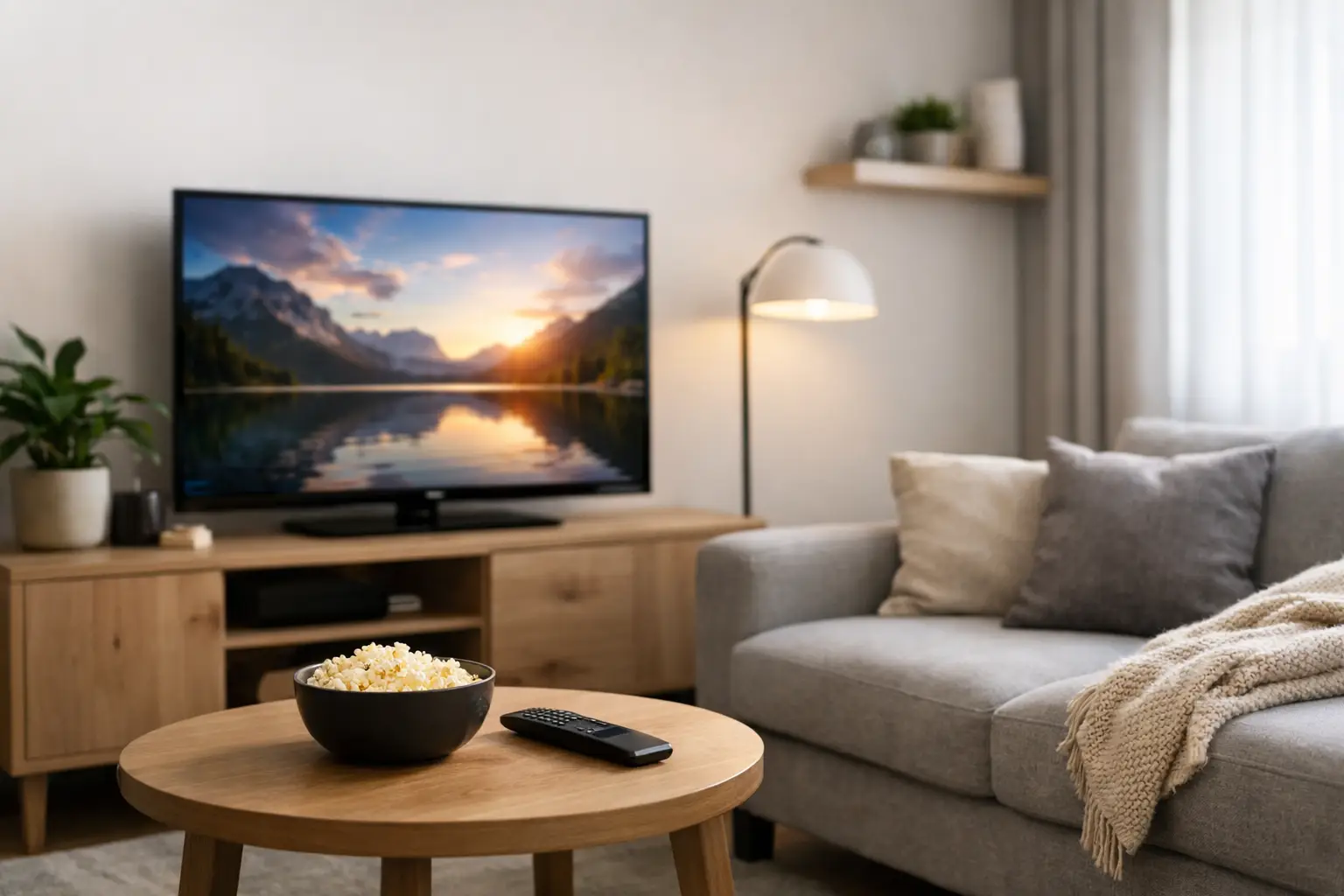
In a small living room, the wrong screen size is immediately noticeable. A television that’s too large will dominate the wall and tire the eyes, while a screen that’s too small simply won’t provide a good viewing experience. Therefore, when searching for a recommended TV for a small living room, it's essential to start with the right fit—not just the best deal. Consider the room size, seating distance, everyday use, and budget.
How to Choose a Recommended TV for a Small Living Room
The most common mistake is to think that a small living room requires a significantly small screen. In reality, it’s not just the room size that matters but primarily the viewing distance. If the sofa is approximately two meters away from the screen, a 43 or 50-inch TV is often the right choice. If the distance is shorter—around 1.5 to 1.8 meters—a 43-inch screen will usually suffice. Only in particularly cramped spaces should you consider a 32 or 40-inch model.
Proportion is also key. In a small living room, a screen with a thin frame and minimalist design looks better than a thick, bulky screen, even if the dimensions are similar on paper. Therefore, it’s wise to check not only the inches but also the exact measurements of width, height, and depth, especially if the TV is meant for a narrow cabinet or an existing niche.
The Right Size - Not the Biggest, But the Most Suitable
Many people hesitate between 43 and 50 inches, which is usually the deciding factor in this category. If the living room is mainly used for watching news, series, and regular cable content, a 43-inch screen strikes a balanced and comfortable size. It won’t overwhelm the space, fits most living rooms in urban apartments, and is available in a wide variety of models at competitive prices.
On the contrary, if you frequently watch streaming content, 4K movies, or connect a gaming console, a 50-inch screen can provide a notable upgrade even in a small space—provided the seating distance allows for it. Here, it's not only about size but also about the immersion experience—being able to read subtitles, see dark details, and enjoy fast motion without straining.
At 55 inches, you should pause and assess carefully. There are small living rooms where this will work well, especially if the wall is wide and the seating is relatively far away, but in many cases, it can look cluttered. A screen that is too large doesn't necessarily feel more luxurious—sometimes, it simply feels cramped.
What Matters More Than Screen Size
In a small living room, daily image quality is more important than a few extra inches. If the space is bright, with a nearby window or direct lighting, it’s better to focus on a screen with good brightness and an anti-reflective coating. Otherwise, even an expensive TV may look mediocre during the day.
The type of panel also makes a difference. A standard LED panel is suitable for most users seeking good value for their money. QLED can deliver stronger colors and better brightness, which is an advantage in a bright space. OLED offers deep blacks and high picture quality, but in a small living room and with a limited budget, it’s not always the most practical choice. Sometimes, it’s better to invest in a quality 4K model with a fast smart system than to chase after expensive display technology that won't be fully utilized.
Resolution should almost always be 4K, even on relatively small screens. The price difference compared to Full HD in many models is no longer dramatic, and 4K provides better sharpness, especially in streaming services, new consoles, and future content. On a 32-inch screen, you can still find HD or Full HD models, but from 43 inches and above, 4K is the right standard.
Recommended TVs for Small Living Rooms Based on Usage
If the TV is primarily for regular broadcasts and family viewing, there’s no need to chase after extreme specifications. It's more important to choose a reliable model from a well-known brand, with a user-friendly interface, simple remote, and decent sound. This is especially relevant for those looking for a screen that works well from day one without unnecessary hassle.
If the usage involves Netflix, YouTube, Disney+, local apps, or screen mirroring from a phone, the operating system becomes a central consideration. Google TV, Android TV, LG's webOS, and Samsung's Tizen are the most popular systems. The differences between them are not always dramatic, but response speed, app availability, and updates over time are important factors.
For casual gaming or connecting a PlayStation and Xbox, it's worth checking response time, refresh rate, and HDMI 2.1 support, but proportion should also be kept in mind. Not every small living room needs an advanced gaming screen. If you game occasionally, a good game mode and low input lag will suffice. If you game frequently, the screen should better support fast motion and the latest connections.
Don't Overlook Sound Quality
In a small living room, people tend to think that sound quality doesn’t need checking because the space is small. In reality, weak speakers sound tinny even in a small room, especially during dialogues. If you do not plan to add a soundbar, it's better to choose a TV with clear and balanced sound, not just powerful output.
On the other hand, in a small living room, a compact soundbar can make a significant difference without taking up much space. This is a great option if you want to significantly enhance your movie and series experience without moving to a full audio system. Often, the combination of a 43 or 50-inch TV with a small soundbar will yield better results than a larger screen with mediocre speakers.
Installation on a Stand or Wall
The choice between wall mounting and placing on a stand has a big impact in a small space. Wall mounting saves depth, creates a cleaner look, and sometimes even improves the viewing angle. If the stand is narrow or there’s frequent movement in the living room, this is usually the more effective choice.
However, not every wall is suitable, and not everyone wants to deal with drilling and hiding cables. In such cases, it's important to check the width of the TV's legs. Some models have a reasonable width for the screen itself, but the legs are positioned at the edges and require a particularly wide stand. In a small living room, this minor technical detail can become a real issue.
Specifications to Check Before Purchasing
Focus on specifications that truly aid decision-making. Screen size, resolution, operating system type, number of HDMI ports, Wi-Fi connectivity, Bluetooth support if needed, and compatibility with existing receivers, consoles, or soundbars are crucial data points. Warranty period and the name of the importer are also relevant, especially when purchasing a product meant for daily use over the years.
It's less important to get excited about vague marketing terms that have no clear significance in everyday use. Not every "advanced picture engine" or "cinema experience" will translate into a noticeable improvement. It’s best to compare models based on actual performance, reliability reviews, and daily usability.
What Sizes and Models Suit Most Buyers
For most people searching for a recommended TV for a small living room, the choice will likely fall on 43 or 50 inches. These sizes offer the best balance between comfortable viewing, price, availability of models, and fitting the room. In these categories, you'll also find the widest variety of well-known brands, from affordable entry-level models to more advanced ones with QLED technology, fast smart systems, and better support for gaming.
If the budget is limited, it's better to choose a reliable brand at a basic level rather than a larger model from a lesser-known brand with enticing specifications on paper. A screen is a product used every day, and thus reliability, user-friendly interface, and service are almost as important as picture quality. This is especially true when buying online and wanting a clear comparison between specifications, stock, price, and warranty—exactly the kind of purchases that should be straightforward and not inflated with promises.
When Is It Worth Increasing the Budget?
There are times when increasing the budget is justified. If the living room is very bright, it’s worth paying more for better brightness. If the usage is based on streaming and apps, it's wise to choose a fast operating system and avoid being stuck with a slow interface. If you plan to connect both a console and a soundbar and a receiver, it’s advisable to check in advance that there are enough ports to avoid having to compromise later.
On the other hand, you don’t always need to upgrade just because there is a more expensive model. In a small living room, a smart improvement in the right choice is more important than an automatic leap into the premium category. Sometimes the best decision is simply to buy a quality 43-inch screen with 4K resolution, a good smart system, and an organized warranty—and know it fits your needs perfectly.
If you’re torn between several options, prioritize a screen that fits well into the space, matches your viewing habits, and offers a balanced specification at a reasonable price. Ultimately, a good TV for a small living room is not necessarily the one that looks most impressive on the product page, but the one that is right for your home from day one.
- Setting Up a Dual Workstation for Efficient and Comfortable Work
- How to Choose a Mechanical Keyboard for Work, Gaming, and Typing
- What Charger is Right for Your Phone? Here's How to Choose Wisely
- Guide to Buying a Security Camera for Home, Business, and Outdoor Use
- Tablet Repair Lab - When to Repair and When to Replace?
- 5 Akhad Ha'am St., Netanya, Israel

- Phone: +97298821001
- Sunday - Thursday: 11:00 - 24:00
Friday: 11:00 - 16:00
Saturday and holiday: 20:00 - 24:00 - Contact us form

© 2002 - 2026 TopMarket.co.il - Powered by AnyWeb.co.il